
Skull Hero
Horus Ent HKRole Playing
4.5252.00 Reviews
- Version
- 0.0.3.0
- Installs
- 100.00K
- Age Rating
- Everyone 10+
Screenshots
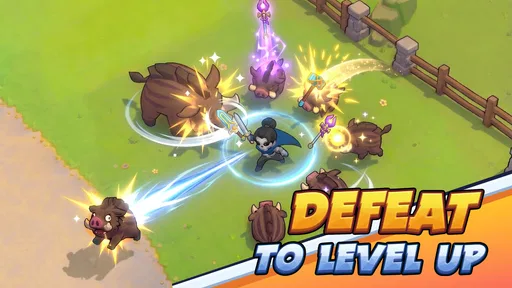
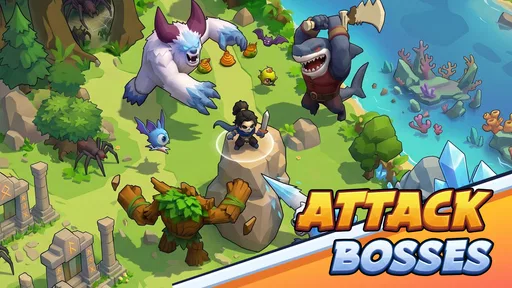
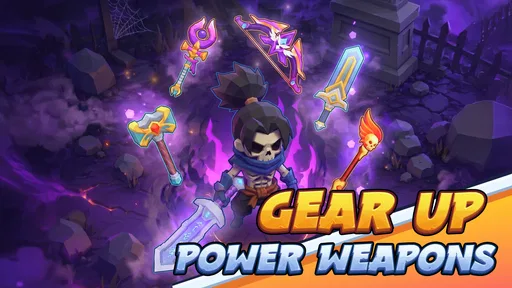
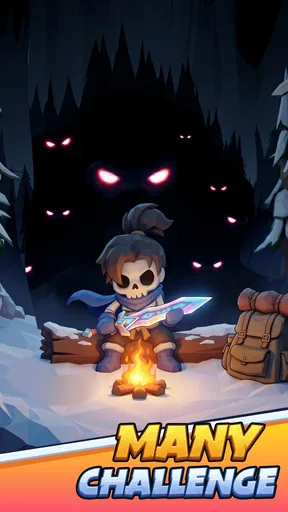
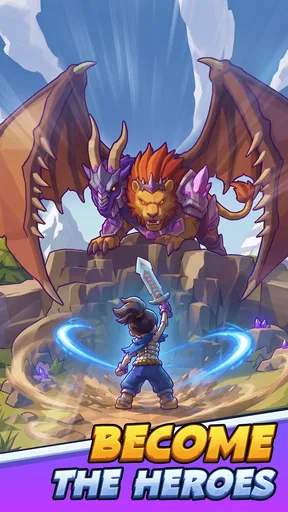
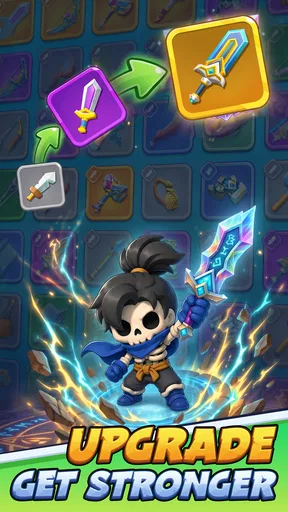
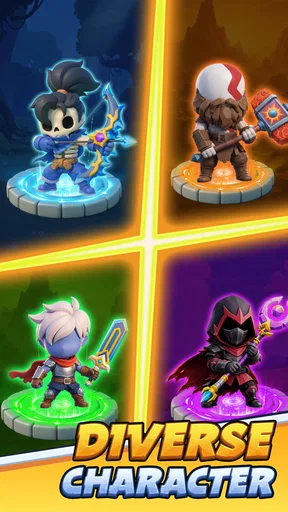
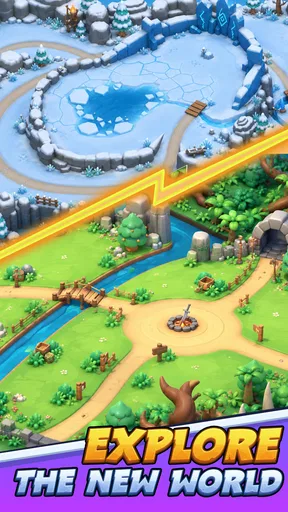
Our Review of Skull Hero
 Analysis by Appyee
I spent time with Skull Hero as a mobile role-playing game built around heroes, enemies, and the long-term goal of becoming a legend. Its simple store summary gives only a broad idea of the experience, so the more useful question is how comfortably it works in real situations: can I read it without strain, move through it without confusion, and play it when my attention, hearing, or hands are not at their best?
My overall impression is favorable but measured. The game is free to start, carries an Everyone 10+ age rating, and comes from Horus Ent HK. It has reached over one hundred thousand installs and holds a 4.5 average from around fifteen thousand ratings, which suggests that its basic appeal is landing with a sizeable audience. Still, popularity does not automatically make a game accessible to every player. In my experience, Skull Hero is easiest to enjoy when I can give it steady visual attention and do not need highly customized controls or presentation.
How clearly the game presents its role-playing world
I find the game’s role-playing premise easy to place: it centers on a hero facing enemies and building toward greater progress, rather than asking me to absorb a sprawling setting first. That direct framing is useful when I want to know quickly whether a mobile RPG suits my mood. Next, I’d look at how that clarity holds up once I’m navigating the game and deciding what to do from one moment to the next.
Readability and navigation during ordinary play
The first thing I look for in a mobile RPG is whether I can understand the main screen without stopping to decode every icon. Skull Hero presents itself as a compact hero-focused adventure rather than a sprawling simulation. That helps the initial learning curve: the central purpose is clear, and the game’s identity is easy to grasp. I am here to develop a hero, confront enemies, and keep progressing.
That clarity matters for players who prefer direct goals. Someone who becomes tired when faced with several competing menus may find the premise less intimidating than a role-playing game that begins with a huge map, multiple currencies, and a dense quest log. I also found that approaching each screen with one question—what can I do next, and what reward does it lead toward—keeps the experience manageable.
At the same time, a compact interface can still become visually busy once role-playing information starts accumulating. Character details, battle choices, rewards, and upgrade decisions all compete for attention in this type of game. I recommend taking a moment to identify the most important action before tapping quickly. That small habit reduces accidental selections and makes the game more comfortable for players who process information more slowly.
The current version is 0.0.3.0, so I would approach the interface as an experience that may still be developing. That is not a criticism of the game’s premise, but it is relevant when deciding how much polish and consistency to expect. Players who need a mature, highly refined navigation system may prefer to wait for further updates, while those comfortable with an evolving RPG can enjoy discovering how the presentation settles over time.
Text, contrast, and visual attention
Readability is more than whether words technically fit on a screen. In a game like this, I need to distinguish a hero, an enemy, a reward, and a next-step button quickly. The most accessible way to play is to use a screen size and brightness level that let these elements remain separate instead of blending into one busy picture.
I would especially recommend playing in a quiet, well-lit setting when first learning the game. That gives me time to inspect the interface rather than relying on memory. Once the flow becomes familiar, short sessions are easier because I know where to look. This is a useful approach for players with attention difficulties: learn one recurring path at a time instead of trying to understand every system in one sitting.
Skull Hero is not the best match for someone who requires very large text, strong user-controlled contrast, or extensive visual customization. I would not choose it for a player who already knows that small interface labels cause headaches or fatigue. The game’s appeal depends on following visual information, so presentation comfort is not a minor detail; it directly affects how much enjoyment I get from the role-playing loop.
Navigation habits that make a difference
One practical tip is to avoid tapping through rewards or menus while distracted. In a mobile RPG, the fastest route is not always the clearest route, and a hurried tap can make me miss why a new item or upgrade matters. I get more value from Skull Hero when I pause after a battle, check what changed, and then decide whether to continue or adjust my hero.
Another useful workflow is to play in short, deliberate blocks. I might complete a small piece of progress, review the result, and stop before visual fatigue sets in. This makes the game more suitable for a commute break or a few minutes before bed than for a long session when I am already tired. It also helps players who find extended menu navigation mentally demanding.
Motor and sensory considerations
Touch interaction feels most comfortable when I can keep the phone steady and use deliberate taps. Players with reduced fine-motor control may find rapid or closely placed controls more challenging than someone with unrestricted hand movement. My advice is to avoid playing one-handed while walking or carrying something, because that turns a manageable interface into an unnecessarily awkward one.
For users with tremors, limited reach, or difficulty making precise taps, the important trade-off is convenience versus control. A larger device can make visual inspection easier, but it may be harder to hold. A smaller phone can be easier to grip, yet its interface may feel more crowded. I would test Skull Hero on the device that gives the best balance rather than assuming the biggest screen is automatically the most accessible.
Players who are sensitive to flashing imagery, animated effects, or rapid visual changes should begin cautiously. I would keep the first session short and stop if the presentation becomes uncomfortable. The game is built to make combat and progression feel active, but that same energy may not suit every sensory profile. Anyone who needs a calm, low-stimulation experience should treat that as a deciding factor rather than trying to force a fit.
Hearing ability is another consideration. I do not rely on sound alone to understand the basic idea of the game, which is helpful when I am in a public place, sharing a room, or playing with the audio muted. However, muting a game can remove atmosphere and may make some moments feel less informative or satisfying. For a player who cannot depend on audio cues, the practical test is whether the visual presentation remains understandable without sound. Skull Hero is more approachable in quiet environments when I focus on its visible progression rather than expecting audio to carry essential meaning.
Players with photosensitivity or motion sensitivity should make their own comfort the priority. I would not recommend a long first session in a dark room. Keeping ambient light on, increasing distance from the screen, and taking regular breaks are sensible precautions for any visually active game. These steps do not transform the game into a specialized accessibility product, but they can make ordinary play less tiring.
Situational access: when the game fits real life
Skull Hero works best for me in situations where I can look at the screen continuously and make unhurried decisions. A realistic example is a short break at home: I sit down, play through a manageable section, inspect the result, and put the phone away. That setting gives me control over lighting, sound, posture, and interruptions.
It is less suitable when my attention is divided. I would not play while crossing a street, cooking, supervising a child, or moving through a crowded station. Even if the game can be picked up for a brief moment, role-playing progress is easier to understand when I am not constantly switching tasks. This is particularly important for players who need extra time to interpret visual information.
The free entry point makes experimentation straightforward. I can try the game without paying at the start and decide whether its controls and presentation suit me. The age rating of Everyone 10+ also gives families a useful starting signal, though parents should still judge whether the game’s visual intensity and purchase options fit a particular child.
Those purchase options deserve attention. In-app items range from $1.99 to $99.99 each, so the game is free to begin but not necessarily free from spending pressure. For me, the accessibility issue is not only financial. Players who have difficulty resisting prominent offers, or younger players using a shared device, may need a clear rule before playing. I would disable or protect purchasing where possible through the device’s own settings and decide in advance whether spending is off-limits.
This also affects players who need a predictable, low-pressure routine. If progression feels more comfortable when I can simply play at my own pace, I should be alert to any moment where an offer interrupts that rhythm. I would never recommend spending merely to compensate for frustration with a difficult section. The better test is whether the core game remains enjoyable when I ignore purchases.
Where the inclusive experience still has limits
The biggest limitation is the lack of a clearly specialized accessibility focus. Skull Hero is a general mobile RPG, not a tool designed around screen readers, alternative input, high-contrast modes, or extensive sensory controls. That does not make it unusable, but it means players with specific access requirements should be cautious and test it personally before committing time or money.
I would also be careful about recommending it to someone who needs every important action explained in multiple formats. The game’s central idea is easy to understand, yet role-playing interfaces can still ask the player to interpret symbols, visual hierarchy, and changing rewards. If those conventions are difficult for you, a slower, more text-forward RPG may be a better choice.
Likewise, players seeking deep character planning, elaborate storytelling, or a large amount of accessible narrative text may find the compact hero-and-enemy premise too limited. Skull Hero is more appealing when I want a focused mobile game than when I want a substitute for a full-scale console role-playing adventure. That comparison is important: its convenience is a strength, but it also defines what it cannot provide.
Compared with a typical idle RPG, I would approach Skull Hero with more attention to active visual decisions rather than assuming it can run entirely in the background. Compared with a story-heavy RPG, it feels like the better option for someone who wants a direct loop and short sessions. Compared with a highly customizable accessibility-first game, it offers less reassurance for players who depend on adjustable presentation or alternative controls.
There is also a practical device question. The minimum operating-system requirement is Android 7.0, which makes the game approachable for people using older Android hardware. That does not guarantee that every older phone will feel equally comfortable, especially if the display is small or the device struggles with visual activity. I would judge the experience by responsiveness and screen comfort, not by operating-system compatibility alone.
Who should try it, and who should skip it
I would recommend Skull Hero to players who enjoy straightforward hero progression, enemy encounters, and the feeling of gradually building toward a stronger character. It is a sensible choice for someone who wants a free role-playing game to sample during short breaks, especially if that player is comfortable reading a visually focused interface and making deliberate touch inputs.
I would be more selective for players with low vision, strong motion sensitivity, limited fine-motor control, or a need for extensive customization. The same is true for anyone who dislikes in-app purchase prompts or wants a completely predictable spending environment. A slower game with larger text, clearer accessibility controls, or a one-time purchase may be a better fit.
Families should also treat the age label as guidance rather than a complete decision. The Everyone 10+ rating is useful, but a parent may still want to sit with a child during the first session, check how the child handles the visual action, and set boundaries around optional purchases. That is especially worthwhile when the player is sharing an adult’s phone or tablet.
My inclusive verdict
After using it as a general mobile RPG, I see Skull Hero as an approachable but not universally accessible game. Its strongest inclusive quality is its direct premise: I can understand the basic goal without needing to learn an enormous fictional world first. The free starting point also lets me test the visual flow, touch comfort, and sensory feel before making any commitment.
Its weaker side is the absence of clear evidence that it is built for players who need specialized controls or presentation options. I would therefore recommend a personal trial rather than a blanket endorsement. Play in a comfortable setting, mute the audio to see whether the visuals still make sense, use short sessions, and decide whether the interface remains readable when your attention is not perfect.
For me, the game earns a place on the shortlist when I want a focused hero adventure that fits into everyday breaks. I would choose something else when accessibility customization, quiet presentation, deep narrative, or strict purchase-free progression matters more than quick role-playing action. Horus Ent HK has created a promising early version, and the current 0.0.3.0 build is worth exploring for the right player, provided comfort and spending boundaries come first.
My recommendation is simple: try it in a calm, well-lit setting, learn its visual rhythm slowly, and keep purchases separate from your decision about whether the core game is genuinely fun. If those conditions work for you, Skull Hero can be an enjoyable small-screen adventure rather than just another game to install and forget.
Verdict
Strengths of Skull Hero
- Fast-paced combat keeps short sessions engaging.
- Distinct hero abilities add variety to battles.
- Simple controls make it easy to start playing.
- Unlockable content provides goals beyond the first levels.
- Dark cartoon visuals give the game a recognizable style.
Limitations of Skull Hero
- Difficulty can rise sharply and feel unbalanced.
- Progress may become repetitive after extended play.
- Some upgrades can require considerable grinding.
- Small-screen controls may feel crowded during intense fights.
- Ads or in-app purchases may interrupt the gameplay experience.
Other Releases by Horus Ent HK
View All
Fair Shot!
Puzzle3.9

Time Evolve: Age Rush
Action4.5
Similar Picks in This Category
View All
Hair Dye
CrazyLabs LTD4.4

Monster High™ Beauty Salon
CrazyLabs LTD4.5

Bus Simulator - Bus Games 3D
Jima Apps4.4

Flight Pilot: 3D Simulator
Wildlife Studios4.1


Super Stylist Fashion Makeover
CrazyLabs LTD4.4
Frequently Asked Questions
What is Skull Hero, and what kind of game is it?
Skull Hero is an action-focused mobile game built around fast combat, enemy encounters, and progressive character development. Players control a skull-themed hero, move through challenging stages, defeat opponents, and improve their abilities as they advance. The game is designed for short sessions, making it suitable for casual play, although later levels may require more careful timing, upgrades, and strategic use of available skills.
Can Skull Hero be played offline?
Skull Hero may allow some gameplay without a constant internet connection, particularly for basic single-player stages, but certain features can require online access. Advertisements, cloud synchronization, account services, updates, leaderboards, or in-app purchases may not work offline. Before relying on it during travel or without mobile data, it is best to test the game after disabling your connection, since offline availability can vary between versions and devices.
Is Skull Hero free to download and play?
Skull Hero is generally available as a free download, allowing users to install and try the core gameplay without an upfront purchase. However, the game may include optional in-app purchases for upgrades, resources, cosmetic items, or other advantages. Advertisements may also appear during play. Parents should review purchase settings, while all players should check the store listing for the latest pricing and monetization details before downloading.
Does Skull Hero require a powerful Android or iPhone?
Skull Hero is intended for mobile devices and should run on many relatively recent Android phones and iPhones, but performance depends on the operating system, available storage, memory, and hardware. Older devices may experience slower loading, reduced frame rates, or occasional crashes, especially during busy combat scenes. Keeping the game and operating system updated, and closing unnecessary background apps, can help provide smoother performance.
Is Skull Hero suitable for children?
Skull Hero may be easy to understand, but its skull-themed presentation and combat-focused gameplay mean it is not necessarily appropriate for every child. The recommended age rating, advertising content, data practices, and purchase options should be checked on the official Google Play or App Store listing. Parents should also consider enabling purchase restrictions and reviewing whether the game’s action, difficulty, and online features are suitable.
Play our best games!


